Cattle Reproduction Is India’s Most Underrated Dairy Challenge — And Tech Can Change That
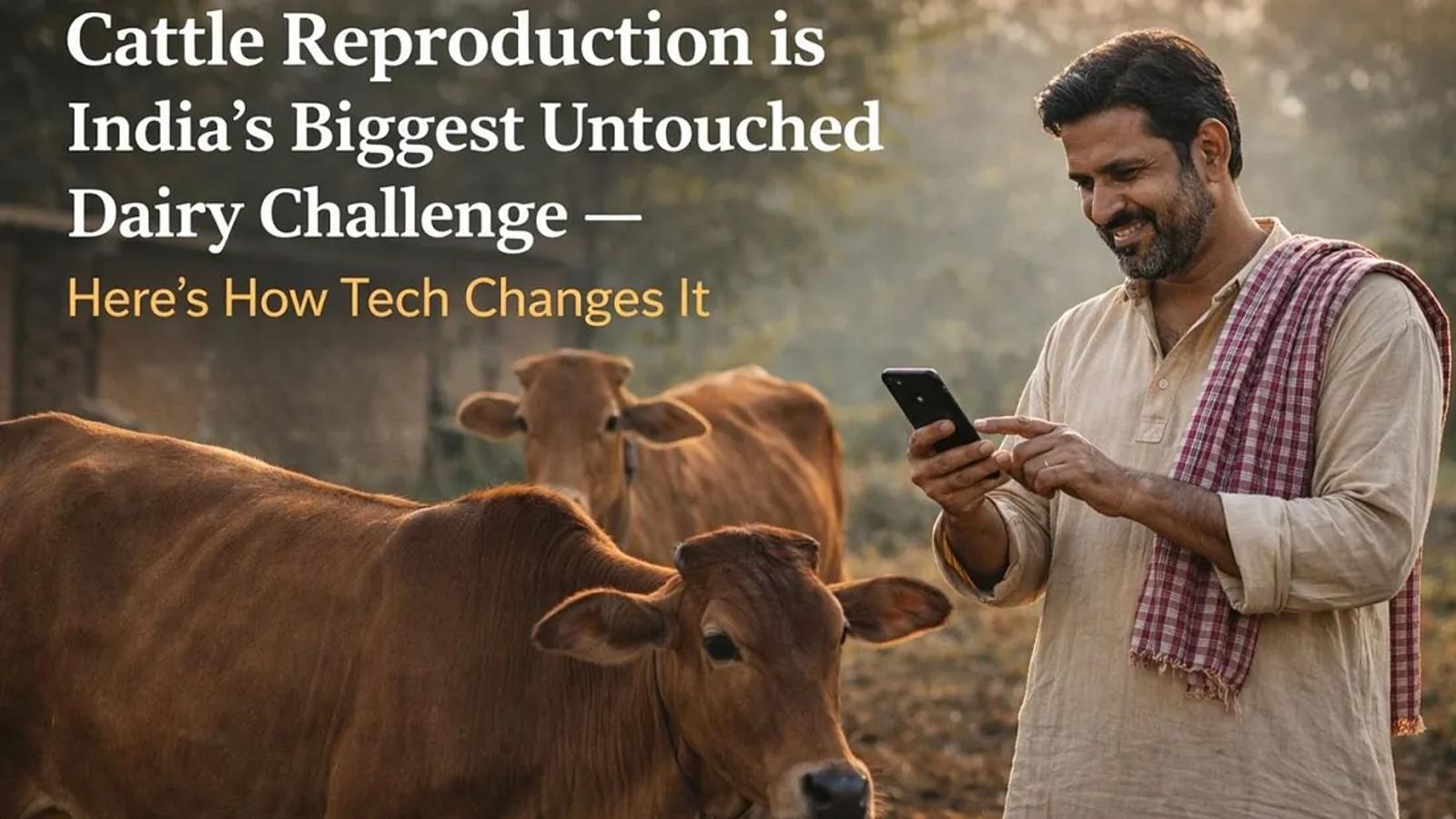
When dairy productivity is discussed in India, the focus is usually on milk yield, feed cost, or disease management. But one critical factor quietly drives all three.
Reproduction.
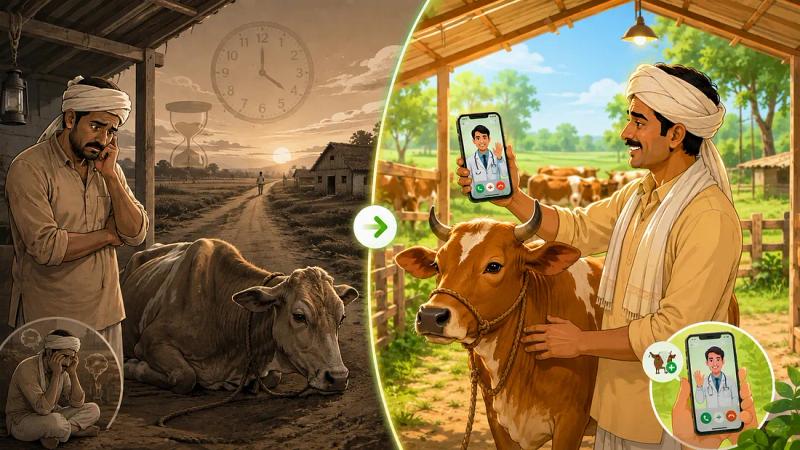
Across thousands of villages, cattle reproduction remains one of the least structured aspects of dairy farming, even though it directly determines milk cycles, farm income stability, and herd growth.
The reality is simple:
Feed can be improved. Disease can be treated. But if reproductive efficiency is weak, productivity will always plateau.
Research in dairy science consistently shows that reproductive efficiency is one of the strongest determinants of lifetime productivity in dairy cattle, because milk production cycles depend on successful conception and regular calving intervals.
Source: Journal of Dairy & Veterinary Sciences
https://juniperpublishers.com/jdvs/JDVS.MS.ID.555628.php
The Hidden Cost of Missed Cycles
A lactation cycle begins only after successful conception and calving. When that cycle gets delayed, everything shifts.
Missed heat detection often leads to:
- Longer calving intervals
- Higher feed cost during non-productive days
- Delayed milk cycles
- Reduced lifetime productivity
In smallholder systems, missing even a few cycles a year can translate into months of lost income. Most dairy cattle come into heat roughly every 18–24 days, and the heat period itself lasts only 6–30 hours, making timely detection critical.
Source: Cargill Animal Nutrition — Heat Detection in Cattle
https://www.cargill.co.in/en/heat-detection-in-cattle_-tips-and-techniques
If these short windows are missed due to workload or subtle behavioral signs, the opportunity disappears until the next cycle. Across villages and across seasons, these delays quietly add up.
Why Reproductive Management Is Difficult
Effective reproductive management requires several moving parts:
- Accurate heat detection
- Timely insemination
- Post-insemination monitoring
- Nutrition support
- Health tracking
To maintain optimal dairy productivity, cows ideally need to conceive within 60–90 days after calving so that they can produce approximately one calf per year.
Source: NDDB Dairy Knowledge Portal — Dairy Reproduction Guidelines
https://www.dairyknowledge.in/sites/default/files/pdfs/Pashupalan_Nirdeshika_English_2024.pdf
In rural systems, this becomes harder due to:
- Limited record-keeping
- Irregular veterinary access
- Dependence on memory instead of structured data
When farmers manage multiple cattle, dates blur, patterns disappear, and past breeding history becomes difficult to track. Without that history, improvement becomes guesswork.
The Real Gap: Visibility
Most farmers understand that reproduction matters. What’s missing is visibility. Farmers often lack:
- Clear cycle tracking
- Breeding reminders
- Historical performance records
- Early signals of repeat breeding
Reproductive inefficiency rarely appears as a sudden problem. It shows up as:
- delayed cycles
- longer dry periods
- gradual productivity decline
Without data, those signals remain invisible.
How Technology Changes the Equation
Digital tools don’t replace farmer experience — they strengthen it. When reproductive events are consistently recorded, several improvements follow:
Heat cycles become predictable.
Cycle tracking and alerts reduce missed breeding opportunities.
Calving intervals become measurable.
Farmers can quickly see when cycles are extending.
Repeat breeding becomes visible earlier.
Patterns emerge through historical data.
Nutrition and reproduction can be linked.
Body condition, milk yield, and fertility data together improve decision-making.
Research in precision livestock farming also shows that sensor-based monitoring systems can detect estrus behaviour and improve breeding timing, helping farmers increase reproductive success rates.
Source: Computers and Electronics in Agriculture — Precision Livestock Monitoring
https://www.sciencedirect.com/science/article/pii/S0168169919315261
The Village-Level Impact
Consider a village where households manage five to ten cattle each. If calving intervals extend by just a few months, the entire local economy feels it:
- Lower annual milk production
- Reduced household cash flow
- Higher feed cost per productive animal
- Fewer calves entering the herd
Now imagine the same village with structured reproductive tracking — heat cycles, insemination dates, pregnancy checks, and calving history all recorded.
Management shifts from reactive to planned. And the impact compounds over time.
Why Reproduction Is the Most Powerful Lever in Dairy
Feed improves margins.
Disease control protects yield.
But reproductive efficiency multiplies both.
Shorter calving intervals mean:
- More consistent lactation cycles
- Higher lifetime milk production
- Better herd growth planning
- More predictable farm income
Studies in dairy herd management emphasize that extended calving intervals significantly reduce lifetime milk productivity and farm profitability, making reproductive management a core economic driver in dairy farming.
Source: NDDB Dairy Knowledge Portal
The Bigger Opportunity
India’s dairy growth will not come only from increasing cattle numbers. It will come from improving the productivity and lifecycle efficiency of existing herds. Reproduction is not a minor technical detail. It is the engine that drives milk cycles, herd renewal, and farm income.
When technology brings visibility to reproductive management, dairy transformation becomes measurable, scalable, and sustainable.
Sometimes the biggest lever isn’t hidden. It’s just never been properly tracked.