WHY RURAL INDIA WILL DRIVE INDIA’S NEXT TECH REVOLUTION ?
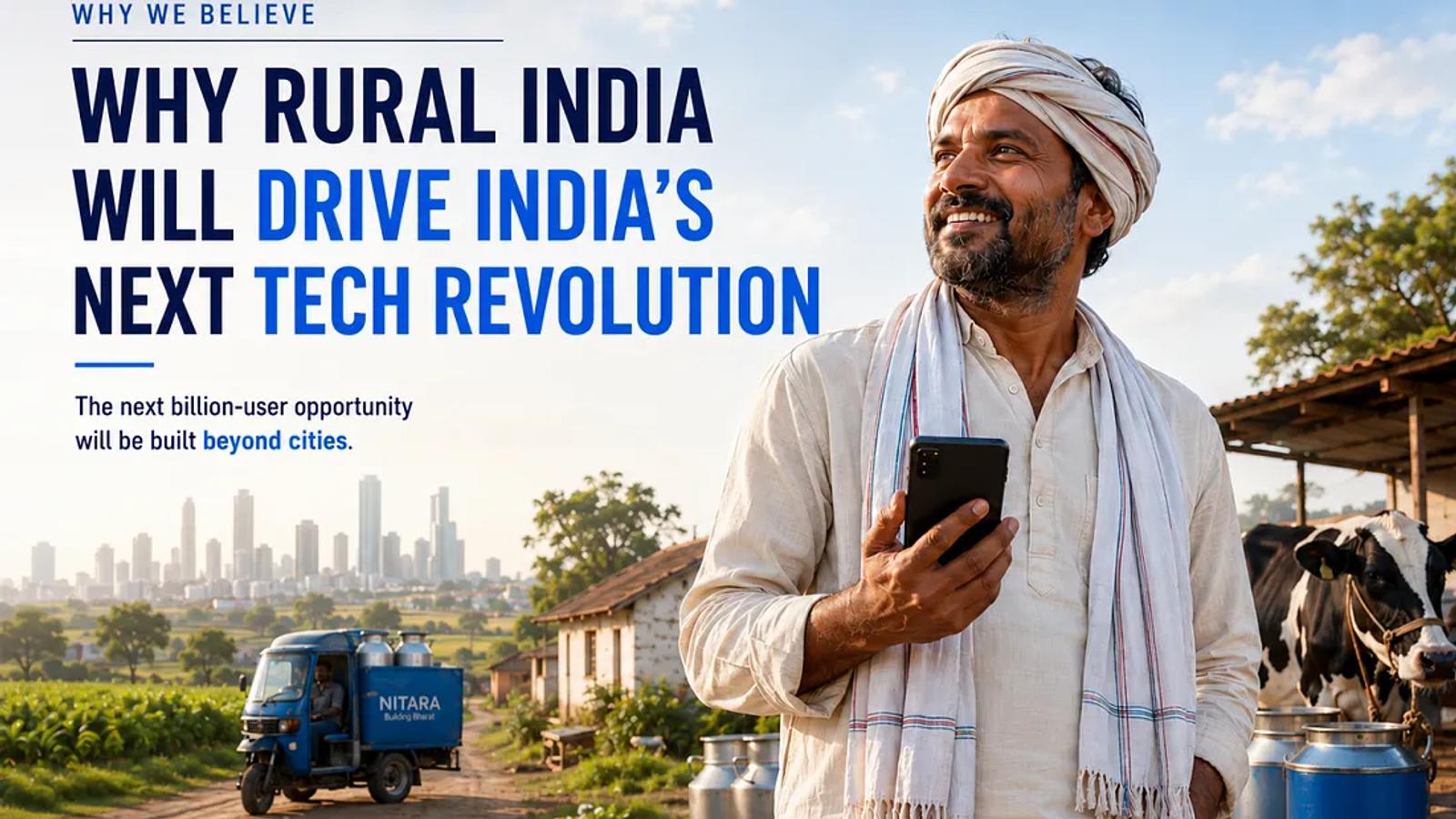
India’s First Digital Wave Was Built Around Cities, For the last two decades, India’s technology story has largely been shaped through an urban lens. Startup ecosystems, venture capital attention, digital services, and product innovation have naturally concentrated around metros and large cities. Urban India became the first wave of adoption because it had stronger connectivity, higher purchasing power, easier logistics, and faster access to smartphones. That phase was important, and it helped build the foundation of India’s digital economy.
But the next phase will look very different.
Why Urban Markets Are No Longer the Biggest Growth Story
The next billion-user opportunity is unlikely to come from already mature urban markets where most categories are crowded and user growth is slowing. It will come from places where digital adoption is still accelerating, where essential problems remain underserved, and where technology can create first-time value instead of incremental convenience. It will come from rural India.
Rural India Is Not a Side Market — It Is a Massive Economic Engine
Rural India is not a niche market waiting on the sidelines. It is one of the country’s largest economic engines. It supports agriculture, dairy, livestock, supply chains, labour mobility, and a growing share of domestic consumption. For years, rural users were seen as delayed adopters of urban products. That assumption no longer holds true. Rural consumers today are more connected, more aspirational, and more digitally aware than ever before. What has been missing is not demand, but products designed specifically for their realities.
The Difference Between Convenience Tech and Livelihood Tech
This is where the next wave of innovation will emerge. Urban technology often focused on convenience. Rural technology has the opportunity to focus on livelihoods. That difference is significant. When technology helps a farmer improve income, helps a livestock owner reduce risk, helps a household access finance, or helps a village business reach new markets, adoption becomes far stronger because the value is immediate and measurable.
The Barriers to Rural Technology Adoption Are Rapidly Falling
The barriers that once slowed rural adoption are also reducing rapidly. Smartphone penetration has expanded significantly. Affordable mobile data has changed internet access across geographies. Digital payments have become familiar. Vernacular interfaces are improving. Trust in mobile-led services is rising. The question today is no longer whether rural India can adopt technology. The question is whether enough technology is being built with rural India in mind.
Building for Rural India Requires a Different Product Mindset
That requires a different product mindset. Rural users often value clarity over complexity, trust over novelty, and utility over excessive features. They need products that are simple to start using, relevant from day one, and reliable in low-friction environments. Many companies still make the mistake of designing for cities and distributing to villages. That approach rarely works at scale. Building for rural India means understanding its workflows, language preferences, operating conditions, and economic priorities from the beginning.
What We See First-Hand Through Rural Dairy Ecosystems
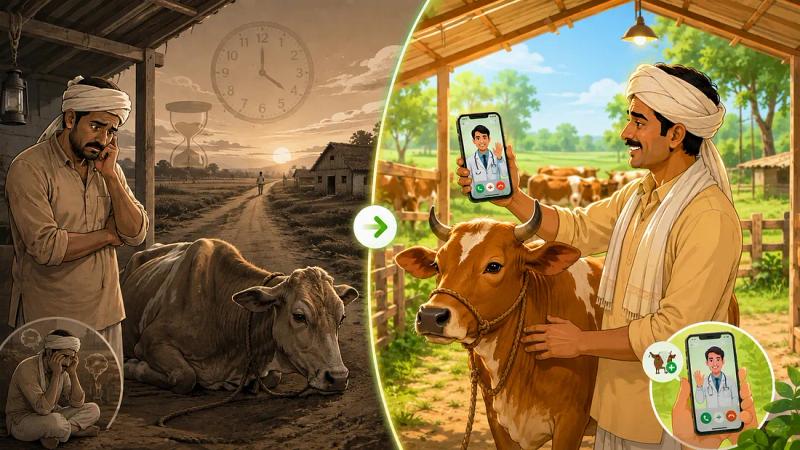
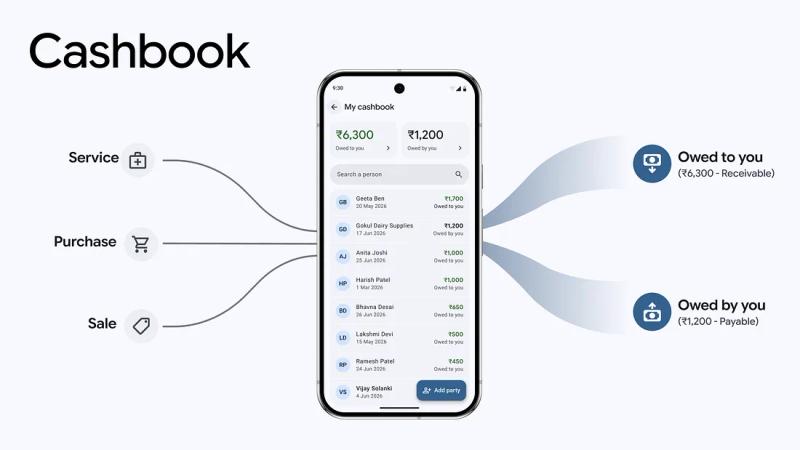
At Nitara, we see this first-hand through rural dairy ecosystems. Farmers and livestock owners are highly practical adopters. They do not need to be convinced by trends or jargon. They adopt technology when it helps solve real problems such as improving productivity, reducing uncertainty, tracking operations, or making better daily decisions. When the value is visible, adoption follows naturally.
The Next Generation of Indian Tech Platforms Will Look Different
This is why the next generation of meaningful Indian technology platforms may look different from the last. They may emerge from dairy belts, agri clusters, cooperative networks, district towns, and village economies rather than traditional startup hubs. They may serve users in local languages. They may solve operational problems that mainstream technology ignored for years. They may not appear glamorous in the beginning, but they can become deeply valuable and widely adopted.
Why This Shift Matters Beyond Business
The significance of this shift goes beyond business. When rural India adopts the right technology, it strengthens incomes, improves productivity, expands market access, and increases resilience across communities. It brings more people into formal economic participation and creates growth that is broader and more inclusive.
The Next Chapter of India’s Digital Revolution
The first chapter of India’s digital revolution was about connecting cities. The next chapter will be about enabling the rest of India.Urban India proved that technology can scale. Rural India will prove that technology can transform lives.
And that is where the next billion-user revolution will come from.
Sources
1. World Bank — Rural population (% of total population), India
https://data.worldbank.org/indicator/SP.RUR.TOTL.ZS?locations=IN
2. TRAI — Telecom Subscription & Internet Penetration Reports
https://www.trai.gov.in/release-publication/reports/performance-indicators-reports
3. NPCI — UPI Monthly Transaction Statistics
https://www.npci.org.in/what-we-do/upi/product-statistics
4. World Population Review — Cost of Mobile Data by Country
https://worldpopulationreview.com/country-rankings/cost-of-mobile-data-by-country